
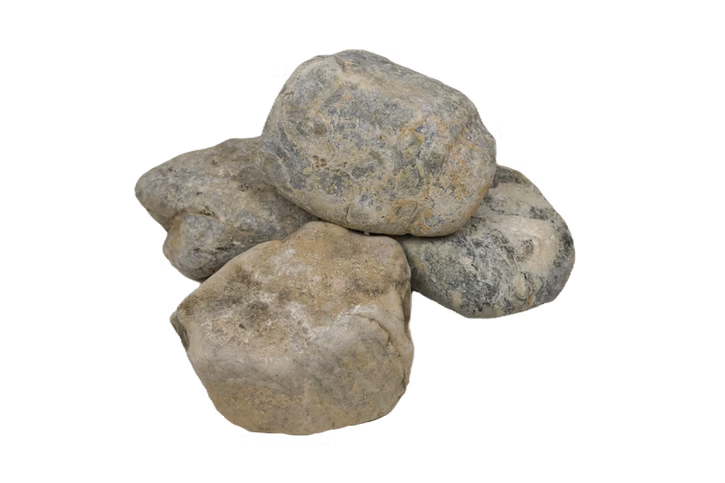
Low-maintenance river rock landscaping means a bed that does not need mowing, remulching, or a new load every spring. It does not mean a bed you never touch. Rounded stone stays simpler than mulch when the fabric, the edge, and the size are right. Skip any one of those and you will be raking rock out of the grass.
If you are still choosing between rounded stone and crushed gravel, read river rock versus gravel first. This page is about keeping a river-rock bed easy after it is in.
Why river rock asks for less work than mulch
Mulch breaks down, fades, and gets replaced. River rock does not rot. It does not need water. Once the bed is deep enough to hide the fabric, the seasonal job is leaves and the occasional weed at the edge, not a trailer of fresh bark.
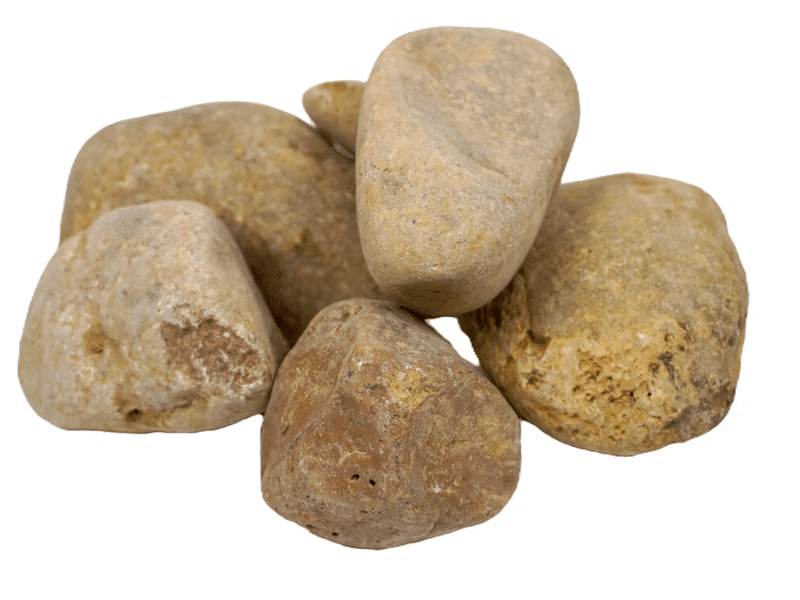
That is the maintenance win. The look is the other reason people pick it. Cafe, Arkansas, and the other mixes in the river rock category give you a color you can match to brick or stucco. Silvermist is a different, lighter gravel if the design wants a cooler tone instead of a creek look.
Where low-maintenance river rock landscaping works
- Planting beds you can see from the street and do not walk through
- Dry creek lines that only carry water in a storm, with a larger size in the bottom
- The strip between a foundation and a walk, where grass is a chore and mulch disappears into the bed
- Around boulders or pots, where you want the ground to look finished without a weekly edge
Two inches over fabric is a common bed depth. Thinner than that and the cloth shows. Deeper than the plants can tolerate and you bury the crowns. Match the depth to the planting, not to a photo of a show garden.
Where river rock creates more work
Rounded stone is a poor surface for a path you use every day. It moves underfoot. It is a poor driveway. It is a poor fill for a French drain, because the voids and the round shape do not match what a drain spec usually calls for. Use crushed gravel there, and keep the river rock where you can see it.
Slopes are the other limit. Small river rock migrates downhill. If the bed falls toward turf, use an edge that actually contains the stone, or step up to a larger size. “Low maintenance” includes not picking rock out of the lawn after every storm.
How to keep the bed tidy
- Put fabric down. River rock does not compact, so weeds have a path if the soil is open.
- Edge the bed. Metal, a stone border, or a hard mow strip stops the migration.
- Finish from one pile. A second lot in the middle of the bed shows.
- Rinse a sample before you buy. The dusty pile and the wet pile are different colors, and you will see the wet color every time it rains.
- Blow or rake leaves. Rock does not hide a winter of debris the way a deep mulch bed sometimes does.
North Texas clay and hard rain are the reason the edge matters as much as the color. The stone can be right and the bed can still fail if water sheets across it into the grass.
If river rock is the wrong shape
Crushed gravel locks and costs less on big areas. Pea gravel is easier underfoot than large river rock and still round, so it has the same habit of traveling. Decomposed granite packs into a path. Lava rock is light and a different look. The landscaping rock guide walks through those choices without turning every bed into river rock.
For a yard visit, start at Bickham Rd or the full location list. Call (469) 972-6781 if you are matching a color that has to be there the day the crew shows up.
What a year of low maintenance actually looks like
The first month is the honest test. Rain shows whether the edge holds and whether you put the stone on thick enough. If fabric peeks out, add from the same pile, not from a new color you found later. If stone is in the grass, the edge is too low or missing on that side. Fix that before you buy more rock. More rock on a leaking edge just gives you more rock in the grass.
Through summer in North Texas, the bed does not need water and it does not need a fresh coat. It does collect dust, live oak leaves, and the occasional weed at a seam. A blower handles the leaves. A weed at the edge comes out by hand. You should not need to top the whole bed every season the way you would with mulch.
Fall is when people discover they ordered a size that traps debris. Very small pebbles hold leaves in the gaps. A slightly larger river rock sheds them. If you already installed the small size and you hate the leaves, do not bury it under a different color. Rake the worst of it and decide whether the next bed, not this one, should step up in size.
An example, so the quantity is real
A bed along the front of a house, 30 feet long and 4 feet wide, at 2 inches deep, is about 0.75 cubic yards before waste. Order closer to a yard so the corners and the curve at the walk are covered from the same pile. That is a pickup for some trucks and a small dump for everyone else. It is not a trunk load, and it is not a pallet of bags.
Bring a brick from the house when you choose the color. Set the rinsed stones on the brick in the sun, not under the shed roof. The match you approve in open light is the match you will see from the curb. Then tell the yard the bed is flat, edged, and not a path. That one sentence keeps river rock from being sold to you as if it were base.
Write the pile name on the ticket before you leave the counter. “The brown one on the left” is not a pile name by the time a delivery is scheduled. The same habit is what makes the bed stay low maintenance: one stone, one lot, one edge.
Questions people ask
What is the lowest-maintenance size?
Larger river rock moves less than a small pebble. It is also harder to walk on and harder to plant through. For a bed you only look at, a mid size with a real edge is the usual compromise.
Do I still need weed fabric?
Yes, if you want the low-maintenance version. Rock alone will not stop weeds in open soil.
Will the color fade?
Stone does not fade like stained mulch. Dust, pollen, and mineral stains change how it looks until it rains or you rinse it. Approve the color wet.
Can Chesshir install the bed?
No. We supply the rock. Bring the square footage and the depth and we can help you leave with the right pile.