
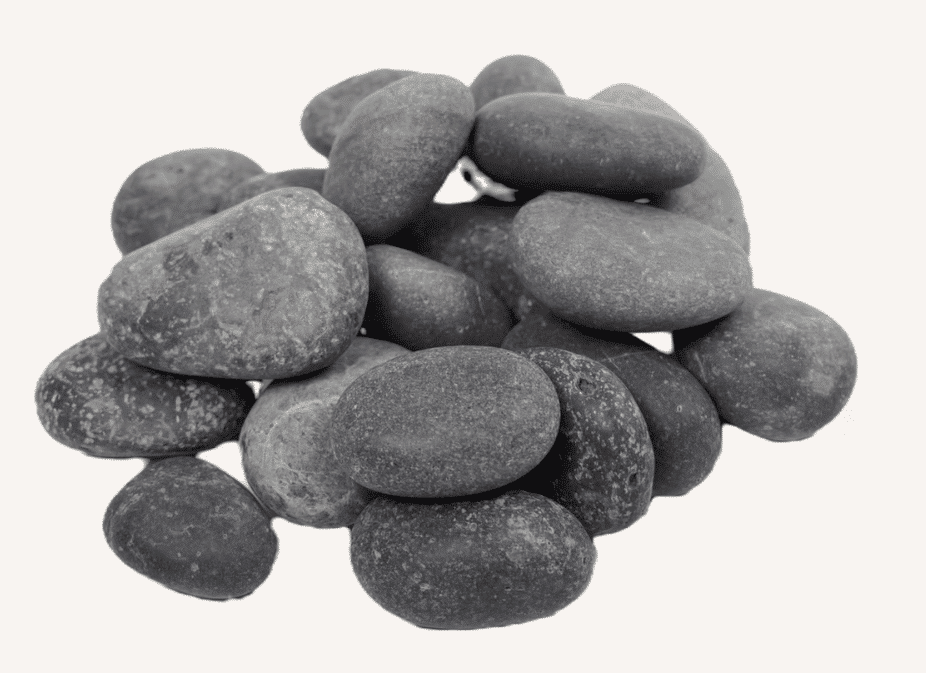
People say river gravel when they want stone that looks like it came out of a creek: rounded, mixed in color, and meant to be seen. They say gravel when they want something that locks underfoot or under a tire. Those are different piles, and buying the wrong one is the expensive mistake.
The short version: use river gravel where the look matters and traffic is light. Use crushed gravel where the stone has to stay put. Chesshir stocks both. This page is the comparison. If you already know you want the rounded stone, the river rock yard notes are the shopping version.
What river gravel usually means
River gravel is rounded stone, worn by water or by tumbling, sold in sizes you can still see as individual pieces. In a bed it reads as a finished surface. In a dry creek it reads as a channel. Next to a water feature it hides the liner edge without looking like road base.
It is not the same product as crushed limestone, pea gravel, or decomposed granite. Crushed stone has faces that bite together. Pea gravel is small and round, a different size class. Decomposed granite packs into a path. If the job is a surface you will walk every day, start with a material that compacts, then decide whether river gravel belongs only at the edges.
Names in the yard are colors and sources, not a single national standard. Cafe river rock runs warm. Arkansas river rock is a lighter mix. Colorado mixes, peach brown, and tumbled options show up when a bed needs more contrast. Availability moves. If the color has to match an existing bed, call before you drive.
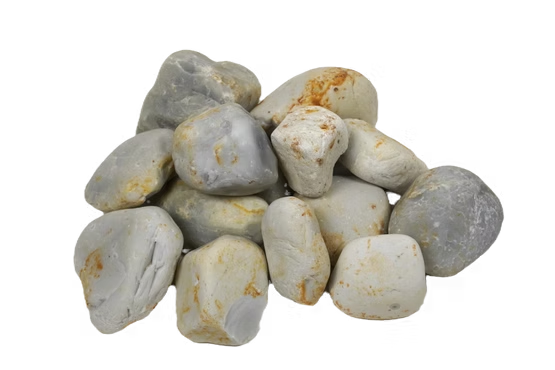
River gravel versus crushed gravel
Shape decides the job more than the word on the sign.
- River gravel sits on the surface. It looks deliberate. It does not lock. On a slope, or anywhere water moves fast, it will travel unless you edge it and choose a larger size.
- Crushed gravel has angular faces. It compacts, sheds water through the voids when the size is right, and belongs under paths, as a base, and in trenches. See the gravel category when function comes first.
A photo of a driveway made of rounded stone is a warning, not a plan. Rounded stone rolls. That is the material, not a bad batch.
Where river gravel is the right buy
- Planting beds where you want a finished look and you will not be driving on it
- Dry creeks, with larger pieces in the flow line if water actually runs there
- Water-feature edges, following the installer’s depth so the liner does not show
- Borders next to flagstone or pavers, where a crushed pile would look like construction leftover
Depth for a bed is often about two inches over fabric, enough to hide the cloth without burying the plants. A thin scatter shows the fabric and lets weeds win. A creek needs more depth in the channel than a flat bed does.
Where crushed gravel is the better buy
Choose crushed stone for driveways, walking paths that should feel stable, French drains, and any base under pavers. River gravel on those jobs looks right for a week and then migrates.
If you are comparing maintenance as well as shape, the low-maintenance landscaping rock notes cover what stays tidy after the first summer. The gravel guide is the place for angular stone, sizes, and what not to put in a drain.
How much to order
Measure length, width, and depth in feet. Multiply, divide by 27, and add about 10 to 15 percent for edges and settling. A 10-by-20-foot bed at 2 inches is a bit over a cubic yard before waste. Order enough to finish from one pile. A second load from a different lot will show as a stripe.
Pickup works for a small quantity if the truck can carry it. Wet stone weighs more than the dry handful you picked up. Dump delivery is the normal path for a full bed. Tell the dispatcher about gates, overhead lines, and where the truck is allowed to dump.
What to check at the pile
- Rinse a handful. Dust is not the color.
- Compare two or three sizes in the same color family before you commit.
- Ask what is actually on the ground today. A catalog photo is not a promise that every yard has that mix this morning.
- Plan the edge. Metal, stone, or a hard border keeps rounded rock out of the grass after a storm.
Chesshir yards in Dallas, Plano, and Hurst are listed on the locations page. The main Dallas yard is Bickham Rd. Call (469) 972-6781 or ask for a quote if you want a color confirmed first.
A simple way to choose at the pile
Stand where you can see three piles at once: one rounded river mix, one crushed gravel, and one smaller pebble. Pick up a piece of each. The river piece is smooth and wants to roll in your palm. The crushed piece has a face that catches. That difference is the whole decision.
Then match the piece to the place. If you can picture the stone as something you look at, from a window or from the street, river gravel is usually the one. If you can picture standing on it, pushing a wheelbarrow across it, or burying a pipe in it, put the river piece back and stay with crushed gravel.
Color is the second pass, not the first. A warm cafe tone next to red brick will disappear into the brick. A lighter Arkansas mix will show the bed as its own shape. Neither is a better stone. They are different against the house. Rinse both. Buy the one that still looks right when it is wet, because that is the version you will see after a storm.
Mistakes that waste a load of river gravel
- Ordering the decorative pile for a path because the photo looked soft.
- Skipping the edge, then spending a Saturday putting stone back in the bed.
- Covering fabric so thinly that the cloth grids show after the first rain.
- Mixing a second lot through the middle of a bed because the first count was short.
- Dumping the load on soil and then “washing” it into place. You are mixing dirt into the color you just approved.
None of those are product defects. They are sequence problems. Approve the pile, confirm the yards, set the edge and fabric, then place the stone. If a contractor is doing the place, send the pile name and the size with them so the second conversation at the yard does not restart the choice.
Questions people ask
Is river gravel the same as river rock?
In the yard they are the same family: rounded stone. “Gravel” sometimes means the smaller sizes and “rock” the larger ones. Look at the pile, not the nickname.
Will it wash away?
On a flat bed with fabric and an edge, it stays. On a slope or in moving water, small rounded stone moves. Use a larger size in the channel or switch to crushed stone where you need it to lock.
Can I use it on a path?
You can, and you will feel every stone. Crushed gravel or a compacted surface is kinder underfoot. Keep river gravel for the beds and the creek look.
Do you install it?
No. We sell the stone. Bring measurements and photos and you can leave with the size that matches the job.